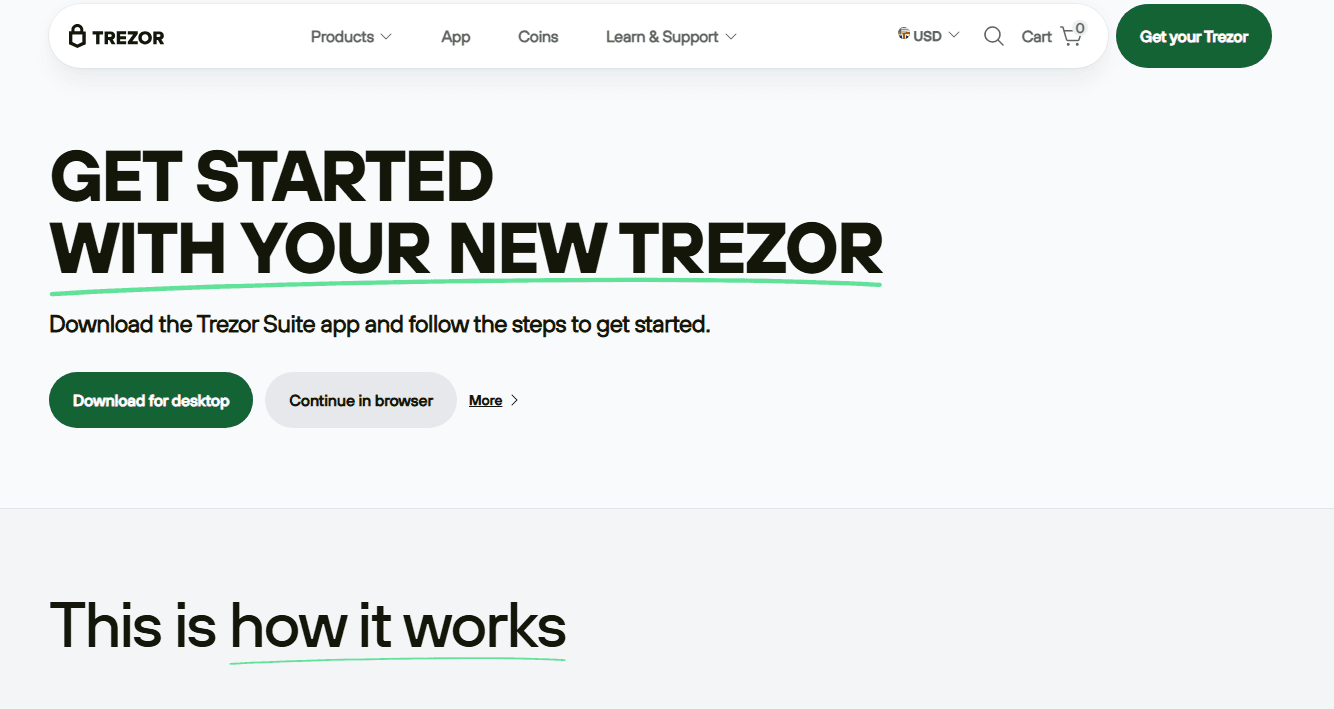
Trezor Login – A Complete 1000-Word Guide to Secure Access and Crypto Protection
Trezor Login refers to the secure process of accessing your cryptocurrency accounts and services using a Trezor hardware wallet. Unlike traditional logins that rely on usernames and passwords, Trezor Login uses hardware-based authentication, ensuring maximum security, privacy, and full ownership of your digital assets. This guide explains everything you need to know about Trezor Login, from how it works to best security practices, with clearly highlighted headings for easy reading.
What Is Trezor Login?
Trezor Login is a secure authentication method that allows users to log in to supported websites, applications, and crypto platforms using their Trezor hardware wallet. Instead of typing passwords that can be stolen or hacked, Trezor Login verifies your identity directly through your physical device.
This system is based on cryptographic proof, meaning your private keys never leave the device and are never exposed online.
Why Trezor Login Is More Secure Than Traditional Login
Traditional logins rely on passwords, which are vulnerable to phishing, malware, keyloggers, and data breaches. Trezor Login removes these risks by replacing passwords with hardware-based confirmation.
Key Security Advantages
No passwords stored online
Protection against phishing attacks
Private keys never leave the Trezor device
Physical confirmation required for access
Resistant to malware and keylogging
With Trezor Login, only someone who physically owns your Trezor device can log in.
How Trezor Login Works
Trezor Login uses cryptographic authentication to verify your identity.
Step-by-Step Process
You choose “Login with Trezor” on a supported website or service
Connect your Trezor hardware wallet to your computer or phone
The website sends a login request
You confirm the request on your Trezor device
Access is granted without entering any password
At no point is your private key shared or exposed.
Devices That Support Trezor Login
Trezor Login works with official Trezor hardware wallets.
Supported Hardware Wallets
Trezor Model T
Trezor One
Both devices provide the same strong security standards and support hardware-based authentication.
Supported Platforms and Browsers
Trezor Login can be used on multiple platforms and browsers.
Compatible Platforms
Windows
macOS
Linux
Supported Browsers
Google Chrome
Mozilla Firefox
Brave
Microsoft Edge
In some cases, Trezor Login may require the Trezor Bridge or WebUSB support for browser communication.
Setting Up Trezor Login
Setting up Trezor Login is simple and secure.
Step 1: Initialize Your Trezor Wallet
Before using Trezor Login, your device must be properly set up with:
A secure PIN
A backed-up recovery phrase
Step 2: Connect to a Supported Service
Visit a website that supports Trezor Login and select “Login with Trezor.”
Step 3: Confirm on Device
Approve the login request on your Trezor screen to complete authentication.
No usernames or passwords are required.
Trezor Login vs Password-Based Login
Understanding the difference highlights why Trezor Login is safer.
Traditional Login
Uses passwords
Vulnerable to phishing and hacks
Passwords stored on servers
Requires frequent password changes
Trezor Login
Uses cryptographic hardware authentication
No passwords involved
No sensitive data stored online
Requires physical device confirmation
This makes Trezor Login ideal for high-security crypto and financial services.
Using Trezor Login for Crypto Services
Trezor Login is commonly used for:
Crypto exchanges
Web wallets
Blockchain services
Decentralized applications (dApps)
Secure identity authentication
By using Trezor Login, users ensure that even if a website is compromised, their crypto access remains protected.
Security Features Behind Trezor Login
Trezor Login is built on strong security principles.
Core Security Features
Hardware-isolated private keys
On-device confirmation for authentication
Encrypted communication
Open-source firmware transparency
No password reuse risk
These features make Trezor Login one of the most secure login systems available.
What Happens If You Lose Your Trezor Device?
Losing your Trezor device does not mean losing access permanently.
Recovery Options
Restore your wallet using your recovery phrase on a new Trezor device
Set a new PIN
Regain access to Trezor Login-enabled services
⚠️ Important: Anyone with your recovery phrase can access your accounts, so store it offline and securely.
Common Issues With Trezor Login and Solutions
Some users may face minor issues when using Trezor Login.
Common Problems
Device not detected by browser
Trezor Bridge not installed
USB connection issues
Browser compatibility problems
Simple Solutions
Use a supported browser
Install or update Trezor Bridge
Try a different USB cable or port
Restart the browser and reconnect the device
Most issues are easily resolved with these steps.
Best Practices for Using Trezor Login Safely
To maintain maximum security:
Always verify login requests on your device screen
Never approve unexpected login prompts
Keep your device firmware updated
Store your recovery phrase offline
Use Trezor Login only on trusted websites
These practices ensure long-term protection of your accounts.
Who Should Use Trezor Login?
Trezor Login is ideal for:
Cryptocurrency investors
Privacy-focused users
Traders managing high-value assets
Users tired of managing passwords
Anyone seeking advanced digital security
It offers peace of mind by eliminating common online threats.
Advantages of Trezor Login for the Future
As digital security threats increase, password-less authentication is becoming the standard. Trezor Login represents the future of secure access by combining:
Hardware-based security
User privacy
Ease of use
Strong cryptographic protection
This approach aligns perfectly with decentralized finance and self-custody principles.
Conclusion: Why Trezor Login Is a Smart Security Choice
Trezor Login provides a powerful, password-free way to access crypto services securely. By using hardware authentication instead of traditional logins, it eliminates many common security risks such as phishing, hacking, and password leaks.